Tribalism
Published : June 24, 2023
Tribalism is Inefficient
Bloodless civil wars are being waged across the world. The tribal warfare within most nation-states prohibits productive government and leads to vast inefficiencies. The greater the political conflict, the more inefficient an administrative body becomes.

The bottom left corner represented here as the Ideal Range is what civilization should strive for. In the Ideal Range, political opposition leads to constructive challenge of policy and government spending packages, which ultimately improves the result. Adequate challenge improves outcomes, but there is a point in which challenge becomes an impediment; this is when the line crosses into tribal conflict.
The top right of the graph represents a total civil war, where both sides are solely focused on destroying one another. Total civil war is generally an extremely inefficient use of time, as progress in most other areas of civilization cease to exist. It should be noted that certain total civil wars can have a justified rationale, if there are ethical, moral, or social humanitarian betterment principles at stake. Most nation-states fall somewhere in the middle of the range, where tribal conflict leads to government inefficiencies.
Published : June 24, 2023
Political Hate Shows
Tribalism sells. The monetization of political hatred is a profitable business for media companies. Tribalism is promoted by pundits who package and sell political hatred. The Political Hate Shows produced by these media organizations inflict irreparable damage upon society, as the broadcasted hatred deepens political divides within a political community. Businesses built upon foundations of selling hate are unethical and should not be consumed.
The table below approximates the time wasted each year on watching Political Hate Shows in the United States of America.
Wasted Hours on Political Hate Shows

A rough estimate of over 6 billion hours each year are wasted in the United States based on this simple methodology. It must be noted that this estimate is for one nation-state only, and does not account for the time citizens spend conversing, texting, posting on social media or any other form of communication negatively influenced by Political Hate Shows. Every year, billions of hours are directed towards hatred of the “other side” to produce an economic benefit for select media organizations. This phenomenon drastically reduces constructive bi-partisan dialogue. Turn off Political Hate Shows.
Source: Derived using Watching, Reading and Listening to the News|https://www.pewresearch.org/politics/2008/08/17/watching-reading-and-listening-to-the-news/
Published : June 24, 2023
Tribalism is Wasted Time
Tribalism limits the progress of humanity by wasting time. Time is among the scarcest of resources, and when political parties spend time entangled in partisan warfare instead of improving lives, time is lost. Wasteful expenditure of time should be thought of no differently than wasteful spending. Stated differently, how elected representatives spend their time is a crucial ingredient to the overall effectiveness of a government. If the time of government representatives could be more fully allocated to improving the condition of the citizenry and the environment, rather than engaged in partisan warfare, the progress of humanity would greatly accelerate.

We must not only consider the time of elected representatives, but also the time of the people. The vast majority of the population has a limited amount of time to spend engaged in the day-to-day operations of government. Unfortunately, most receive information about the government from media sources that endorse political hate. When an individual’s scarce time is directed toward mockery of an opposition party and its leaders instead of constructive dialogue on policy, it is a tragic and lost opportunity.
Published : June 24, 2023
Political Parties are Tribes
Tribalism occurs when a political party allows conflict with an opposition party to distract them away from their intended policy agenda. Stated differently, war against the opposing party becomes the dominant agenda. So why do political parties act in a tribal manner? There is an argument to be made that the tribalism phenomenon occurs in the subconscious mind of the party. That is, the most influential voices in a political body aren’t necessarily setting out to wage war against an opponent, but attempting to strengthen the community bonds of their own belief system. War is the optimal creator of disparate unity; there is no better way to unify a group of people–“us”–than by putting them in opposition against other people — “them.” The “us vs. them” strategy has served the rulers of civilization since the dawn of humankind. We must evolve beyond this.
A distinction must be made between constructive and unconstructive conflict. When elements of an idea, product, or policy are challenged, opposing disagreements and feedback can lead to refinement and help make the idea, product, or policy better and more resilient. In the current nation-state regime where tribalism dominates the political landscape, constructive conflict seldom occurs. Partisan warfare clogs the pipes of productive and efficient debate. Political conflict should yield a net positive result for the populace, but when the system is infected with tribalism the result is a net negative.
Objective, merit-focused, rules-based policy decision making is the optimal way for a political body to operate. Modern civilizations struggle to move forward through the tribal mud pits, and governments are not meeting their full potential due to the irrational and unproductive impacts of tribal effects. We must strive for a system where tribalism does not strangle effective administration. Merit must rule the future, not hatred.
Too Big to Manage
Published : June 24, 2023
Tax Spending is Opaque
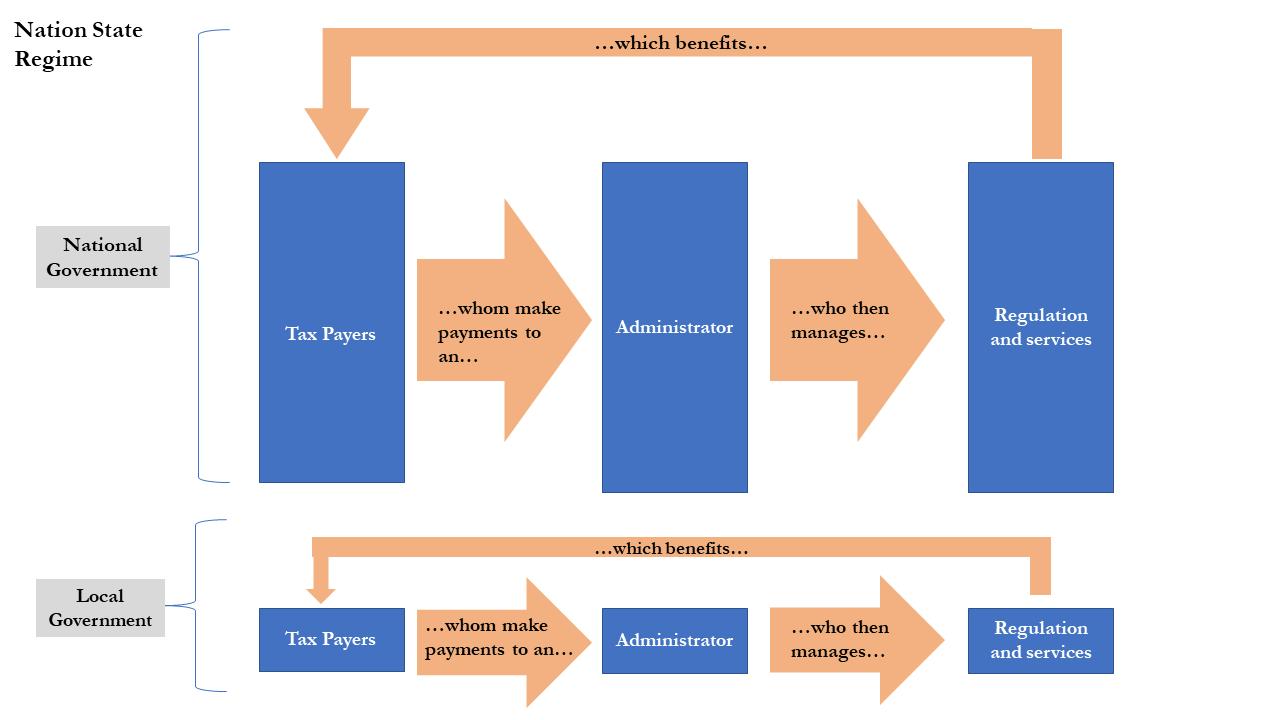
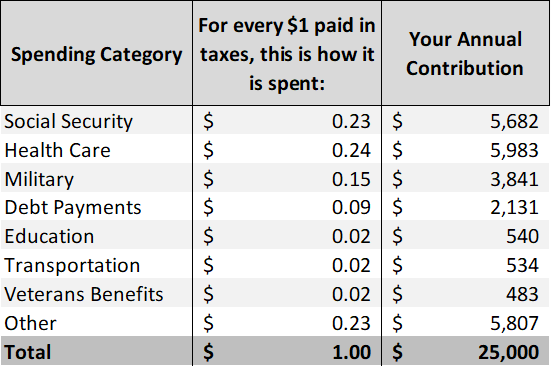
It is impossible to understand exactly how governments spend money. That is, the collection of taxes, traveling from one’s paycheck to final expenditure by a government agency cannot be easily traced. This is the result of several factors including overlapping layers of government, lack of sufficient disclosure in one’s paycheck, and difficult to follow government spending disclosures. The illustration below is a simplified diagram of government tax collection, transfers, and ultimate use. 
The lack of transparency along the government money trail creates several problems. These include:
- Disengaging citizens as it is unclear how tax money is utilized;
- Facilitating a lack of accountability for public spending by elected representatives; and
- Making the true cost of government services impossible to track, and thus impossible to manage efficiently.
We need to find a way to make public spending more transparent and easier to understand.
Source: Daily US Treasury Statement| https://fsapps.fiscal.treasury.gov/dts/issues
Published : June 24, 2023
State Leaders Have Too Much Power
The nation-state places far too much power into state executives. Whether it is a president, prime minister, dictator, general secretary, or other form, there is too much authority concentrated into one human being. Humanity has attempted to turn away from allocating large portions of power to one decision maker (e.g. the end of monarchies), yet a residual energy remains. Now is the time to fully exit. Decentralization of power is necessary progress.
Published : June 24, 2023
A Debt Fiesta
We will borrow until we can borrow no more. Nation-states currently have massive debt obligations and limited discipline to reduce these growing debt mountains. The current trend of federal government spending in excess of tax collections will continue to increase as fractured political systems are unable to deal with growing budgetary issues.
The graph below depicts federal debt as a percentage of GDP which measures debt vs. the size of an economy. The nation-states presented below make up more than half of the world’s GDP. One will notice the upward trend, particularly the average which has climbed from 37% to more than 125% over the past 50 years. This pace is not sustainable and will inevitably lead to financial catastrophe.
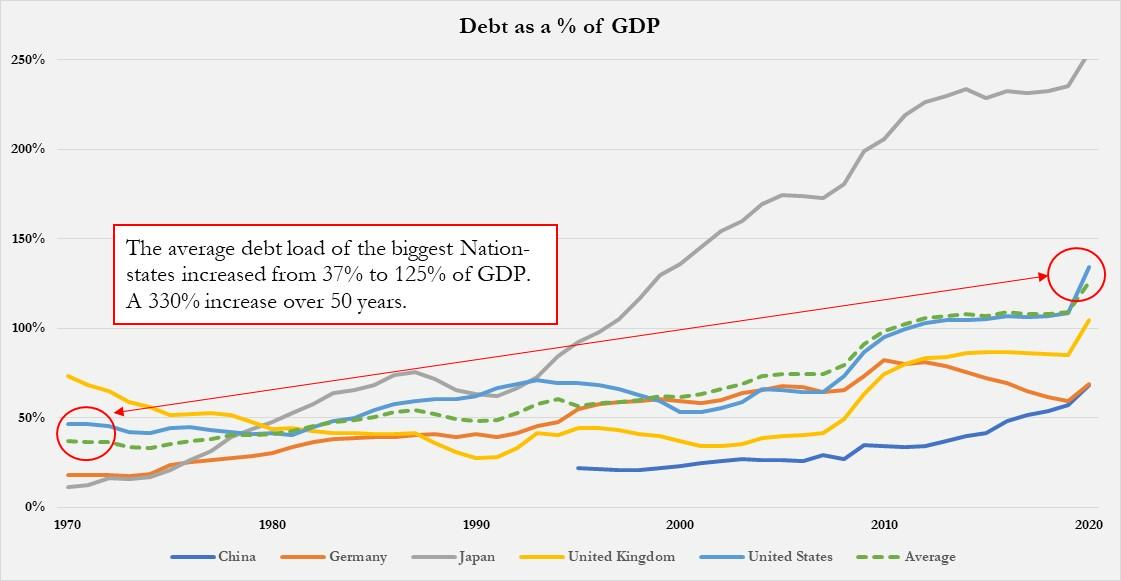
It is only a matter of time until debt investors, also known as the bond vigilantes, reject the inability of nation-states to service their debt. A couple of other crucial points about the nation-state Debt Fiesta:
- Even before a missed debt payment, the brinkmanship conducted by political parties to default on public obligations adds volatility and uncertainty to financial markets.
- When too many private sector firms have over-borrowed or not properly planned for crisis moments, the nation-state government and monetary authority step in to bail them out by issuing more government debt. This debt absorption phenomenon distorts financial markets by mispricing risk, and enables irresponsible firms to benefit from public funding. Ultimately, the taxpayer is bailing out private enterprise. Were tax pools smaller, the scale of this irresponsible moral hazard would be greatly reduced.
Sources: International Monetary Fund| https://www.imf.org/external/datamapper/GG_DEBT_GDP@GDD/SWE
Published : June 24, 2023
A Lack of Accountability
Nation-state democracies lack sufficient accountability mechanisms to ensure that elected representatives perform their job well. Re-election is only partially effective since, in many cases, a bad representative can inflict large quantities of damage to the state treasury before their term has expired.
A large part of the problem is that elections are heavily influenced by factors that have little to do with a representative’s job performance. These include the timing of the economic cycle, the gravity of the political pendulum, the campaigns of marquee candidates of the same political party, the amount of money spent on a campaign, demographic shifts, clever marketing campaigns, and other factors. If some combination of these factors are favorable for a bad representative, they are re-elected despite their poor job performance.
Another component of the accountability problem is that few metrics or performance indicators exist to measure an elected representative’s performance. When a voter goes to the election booth, what statistics do they have to help inform their decision? What data and metrics are available? The only broadly public data available on the candidate are sound-bytes from the campaign trail.
In an era where we are data rich, we are information poor. As a result, most voters make their decision based on political party affiliation or promises made by candidates on the campaign trail. Accountability is severely lacking in current government systems — let’s fix this.
Sources: Voting Behavior| https://www.icpsr.umich.edu/web/pages/instructors/setups2008/voting.html
Published : June 24, 2023
A Bad Deal for the Taxpayer
One of the many failures of the tax system under the nation-state regime is the lack of mutual benefit between taxpayer and tax spender. A mutual benefit, or a “good deal,” is when two parties in an agreement both benefit from an exchange. Think of a sale, where a buyer purchases a product, and a seller receives money in return. If the seller’s product is of good value, the buyer will recommend that product, which enables a seller to establish future sales. Both parties are properly incentivized. What about the tax system? Does it provide proper incentives to both the taxpayer and tax spender?
What does the taxpayer seek? The taxpayer wants an optimization of their tax obligation. That is, to have a variety of effective state services provided in the most cost-effective manner. Is the tax spender properly incentivized to fulfill the desire of the taxpayer? Is there adequate incentive to provide the best state services at the least amount of cost? This text argues no.
Let’s examine how the tax spender is incentivized.
1) Financial. Many tax spenders are incentivized to build their personal brand for financial gain. If one can build a public persona, they can monetize that persona via a book deal, media appearances, speaking events, etc.
2) Re-election. Many tax spenders are focused on re-election, fundraising, and campaigning for the next election cycle to maintain their job, and they do not prioritize improving the condition of government services.
3) Power. Some tax spenders simply have a thirst for authority, and public representation fulfills that desire. Delivering improved government is secondary, at best.
4) Party Recognition. Serving in public office and advancing political party objectives can be a springboard to higher and more visible public office, particularly in nation-states with dominant/single party rule.
There are some tax spenders who prioritize government efficiency, but they are in the minority. The only guarantee that the taxpayer has is the campaign promise of the tax spender. A promise. The current tax system is a bad deal for the taxpayer. A new system is needed.
Published : June 24, 2023
Too Many to Govern
Let us examine the size of the tax pool and the ratio of tax spender to tax provider at the founding of some of the largest nation-states. The population of the United States of America upon its establishment was 4 million people, not inclusive of the Native American population as they were not included in the official census until 1840.
These four million citizens, tax providers, were represented by 65 tax spenders in the US House of Representatives, a ratio of approximately 60,000 to 1. In the United States today, that ratio is now ~13 times greater, with a ratio of 760,000 to 1. To put that into a tangible context, if one were to fill a soccer stadium, everyone in that stadium would be represented by one person based on the 1790 ratio. Now, one US House member represents 12 soccer stadiums full of people.
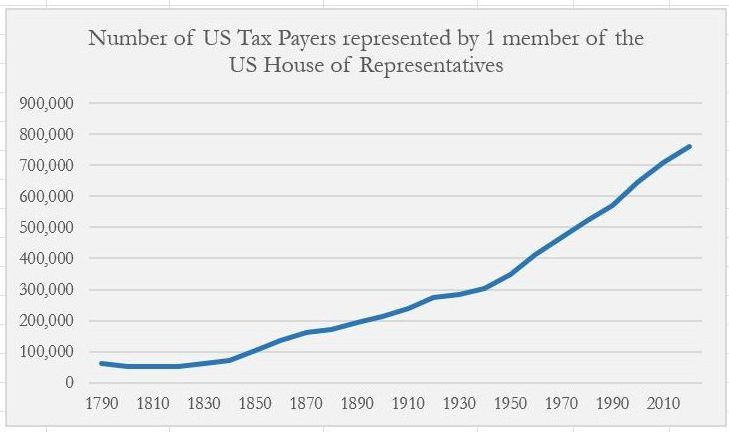
Representing 60,000 people by communicating with them and understanding their views is a challenging task, but arguably possible if one is an engaged and motivated administrator. Accomplishing this same connection to be an effective representative with 760,000 is nearly impossible.
This phenomenon is present in other nation-states as well:

The larger the global population grows, the more difficult it becomes for representatives to meaningfully and adequately represent all citizens under the current nation-state regime. An attempt to modify the representative structure to improve these ratios would likely lead to escalated political battles due to the polarized status of many nation-state governments. Simply stated, we are too many to govern under the current administrative system, we must find a better way.
Sources:
United States Census Bureau| https://www.census.gov/history/www/through_the_decades/fast_facts/1790_fast_facts.html
United States Congressional Apportionment| https://en.wikipedia.org/wiki/United_States_congressional_apportionment#Past_apportionments
Demographic History of the United States| https://en.wikipedia.org/wiki/Demographic_history_of_the_United_States
Number of Seats in the House of Commons since 1707| https://commonslibrary.parliament.uk/research-briefings/sn02384/
False Walls Create Inequality
Published : June 24, 2023
False Walls Destroy Potential
The false walls of international borders enforce a system of disparity between wealthy and poor. Imagine two children born with identical levels of intelligence and work ethic, yet one is born in America and another in Somalia. Is their potential for success equal? Absolutely not. The obstacles that the Somalian child must endure include civil war, decrepit education systems, ailing health care systems, among a variety of other birthplace specific disadvantages. These social environmental hurdles will limit the Somalian child’s ability to succeed. Is it logical for international borders to have an enormous impact on one’s potential? No. We can correct this injustice by tearing down the false walls that hinder potential.
Published : June 24, 2023
False Walls Cause Death
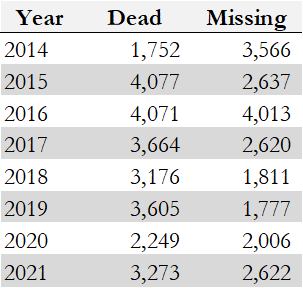
To combat birthplace inequality, many take matters into their own hands and attempt to cross international borders to seek a better environment for themselves and/or their children. Many are so desperate to escape the horrible situations in which they are born that they risk their lives for the opportunity to improve their circumstances. These courageous acts result in desperate migrants on rickety boats in stormy waters; or long pilgrimages through the desert where dehydration takes its toll. The table below estimates the number of dead and missing people due to cross-border migration over the past several years.
Source: Missing Migrants Project| https://missingmigrants.iom.int/downloads
Published : June 24, 2023
Tax Royalty
The nation-state regime enables tax royals who manipulate the system. Inconsistent laws across tax jurisdictions, defined by nation-state borders, facilitate an entire industry of hiding wealth for large companies and the privileged. Advanced tax strategies that funnel tax obligations into nation-states with lower tax rates are accessible to those who can afford sophisticated tax experts. This practice results in nearly a trillion dollars in lost government revenue annually. Additionally, this results in regressive tax effects, where lower income earners pay a larger percentage of their income than the wealthy. Let us tear down the False Walls, eliminate tax inequality, and put an end to Tax Royalty.
Sources:
Tackling Tax Havens | https://www.imf.org/external/pubs/ft/fandd/2019/09/tackling-global-tax-havens-shaxon.htm
Institute on Taxation and Economic Policy| https://itep.org/whopays/
The Separation of Race and State
Published : June 24, 2023
Genocide
Militias and political parties sometimes harness ethnic hostility to justify the systematic killing of a particular racial-ethnic group, resulting in genocide. These genocidal influencers are motivated by a desire to improve economic conditions, exercise an ethno-racial superior ideology, change the dominant racial-ethnic composition of a particular geographic area, and/or other motivating factors
Genocide, in the developed world, might seem like ancient history, or an outcome that could never occur in the future. However, we should not be naïve of the possibility of future genocides in the developed world as economic cycles can deteriorate quickly and devolve into civil unrest. We should also acknowledge current genocides which are poorly publicized and lost in the rapid winds of modern news flow.
We must be meticulous in our attempt to rid the world of racial-ethnic hostility and dilute racial-ethnic tension to levels where it does not present a potential danger. The end of the nation-state regime will drastically reduce racial-ethnic tension and therefore reduce the likelihood of genocide.
It is time to separate race and State.
Sources:
Genocide | https://hrcak.srce.hr/file/142809
War on Steroids
Published : June 24, 2023
War is an act of the state, not the people
Going to war is most often not a choice of the citizens of a nation-state. Nation-states do not hold votes or gather the explicit permission of their citizens when they decide to utilize public resources to kill other human beings. And in fact, many nation-state governments develop propaganda campaigns to convince their citizens that war is necessary. Furthermore, many wars are conducted by nation-state governments despite opposition from the majority of their citizens.
Government representatives initiate most wars, but it is not their blood spilling onto the ground in battle; it is the blood of the people. The process by which government representatives send fellow citizens into battle to die is an abuse of power. The killing machine of state enacted war must be stopped.
Published : June 24, 2023
Nation-States Magnify the Casualties of War
War waged by nation-states is a particularly destructive enterprise. The enormous resource pools accessible to nation-state militaries, funded by civilian tax money, provide a near endless supply of troops, weapons, and other technological tools to manufacture killing. Stated differently, nation- states allocate resources to make killing more efficient and to develop systems of mass destruction; a murder infrastructure funded by taxpayers. We are all to blame, and thus we should collectively solve this atrocity.
Published : June 24, 2023
War Spending
The money spent on excessive wars by nation-state regimes is a colossal tragedy. Excessive war includes armed conflict beyond critical defense and prolonged military campaigns with unclear objectives. These enormous sums of wasted money could have either been: A) spent in a productive manner to improve the life of citizens (e.g. education, infrastructure), or B) not taken from the pockets of citizens in the first place.
The use of public funds to engage in excessive war is a fiduciary breach of duties by elected tax spenders. Stated differently, one of the key responsibilities of elected representatives is to ensure tax dollars are spent appropriately, particularly when human lives are at stake. Any government that uses tax dollars to engage in the destruction of human life beyond critical defense instead of the improvement of human life should be held legally accountable for breach of their fiduciary duties.
The 2001-2021 US war in Afghanistan is a prime example of an excessive war. In addition to the human tragedies and lifelong trauma caused to the people living in Afghanistan as well as the troops who were deployed there, the war cost is estimated around $2.3 Trillion, or $2,300,000,000,000. Other potential uses of $2.3 Trillion of tax revenue include.

Sources:
Costs of War | https://watson.brown.edu/costsofwar/figures/2021/human-and-budgetary-costs-date-us-war-afghanistan-2001-2022
Cost to End World Hunger | https://borgenproject.org/cost-to-end-world-hunger/
Literacy | http://uis.unesco.org/en/topic/literacy
Restrictions on Freedoms
Published : June 24, 2023
Restrictions on Commerce
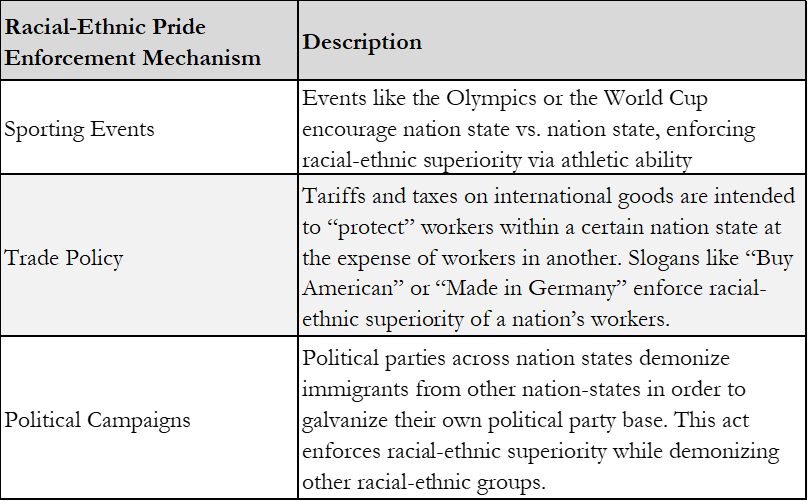
Nation-state tariffs and/or economic policies that favor people of one nation-state over another are prejudiced. Elected representatives often proselytize about the glorification of workers in their nation-state vs. workers in other nation-states. This falsely depicts international trade as a zero-sum game; one nation wins, one nation loses. The truth is that regions of the globe are at different stages of economic maturity, and that transitioning industries from one part of the globe to another is a long-term benefit for all parties.
Politicians utilize an “Us versus Them” (UVT) rhetorical strategy in the context of trade to ignite passion in a disenfranchised segment of the population; “They are taking your jobs.” Whether these strategies are used by enterprising politicians to gather votes, build a personal political brand, or are made from genuine ignorance, blaming people of another race for economic stress is unproductive and prejudiced. Why should workers of one nation-state be regarded as more important than those of another? This portrayal masks the underlying phenomena of different stages of economic maturity and does little to help those who have lost their jobs. At the root of this theology is that people of their nation-state are better, or more important, than those of other nation-states. This practice is a masked form of commercial racism and should be put to an end. Let us end Us Versus Them. #ENDUVT
Protectionism Destroys Prosperity
Economic protectionism (also referred to as tariffs), trade-war policies, or any obstacle to free trade is estimated to cost the global economy hundreds of billions of dollars annually. Stated differently, nation-state economic policies destroy prosperity by enacting selfish rules of trade. As mentioned previously, trade is not a zero-sum game; all parties benefit in the long run when trade is unrestricted.
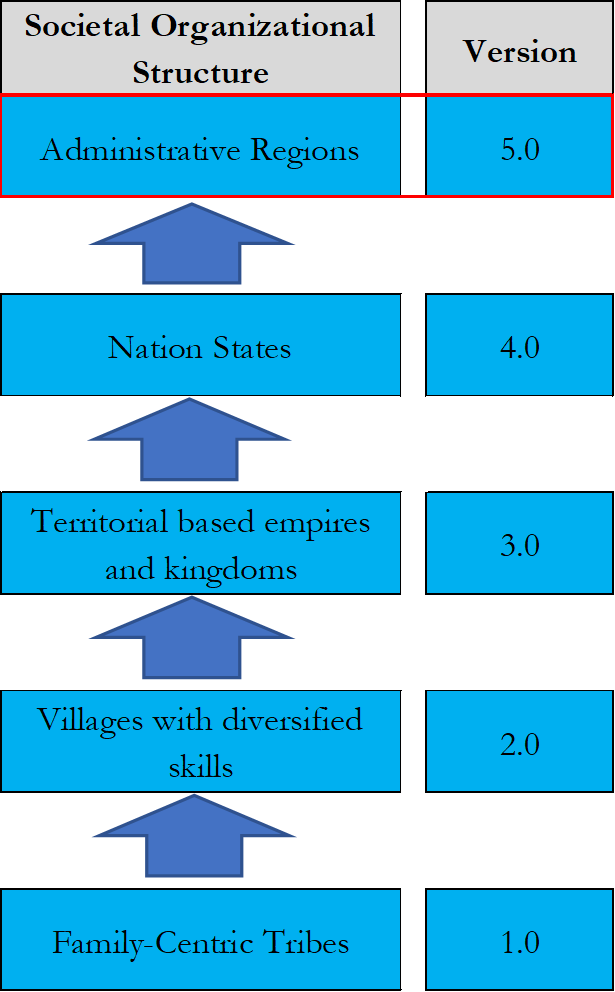
The nation-state system encourages trade wars by artificially segmenting the global population into “nations” that compete against one another for economic dominance. The “glory of the nation” model is stale—leftover from the age of kingdoms—and should not be the go-forward model for Civilization 5.0. We should strive to evolve and educate workers rather than protect industries that are better suited for other parts of the globe in a different stage of economic maturity.
Prosperity evaporates with every tariff dollar collected; let us topple this ancient regime. Kill tariffs to unlock trillions of dollars of economic growth and prosperity while ending commercial racism.
Source: Global Trade Liberalization| https://www.imf.org/external/np/exr/ib/2001/110801.htm#ii
Published : July 22, 2023
Restrictions on Migration
Human beings cannot freely move around the globe. The wealthy can move across borders for purposes of leisure and/or commerce on a short-term basis, but permanent moves are enormously complicated by a variety of factors. Legal complexities, immigration quotas, and enormous costs make moving to a different part of the globe, whether near or far, extremely difficult. The thousands of migration related deaths each year exemplify this struggle.
Restrictions on migration enable despots to rule for decades, as citizens of these “Regional Prisons” are unable to flee in many cases.
Restrictions on migration also distort the job market as certain nation-states have a labor surplus (e.g. unemployed) while others have a labor shortage (e.g. unable to find workers). Additionally, workers being locked within the borders of their own nation-state creates labor arbitrage, where people of similar to identical skills are paid differently based on their geographic location. These vast differences in compensation perpetuate global inequality.
Published : July 22, 2023
Restrictions on Identity
The nation-state system forces a nation-state identity onto its citizens; there is no choice in the matter. Most people at birth are forced into a nationality, which is accompanied by a set of beliefs and values which may not align to the person’s natural beliefs. These forced values are imposed upon nearly all human beings on the globe in varying degrees of intensity.
The theology of “Nation” need not be forced upon us.
Published : July 23, 2023
Restriction on Religious Freedom
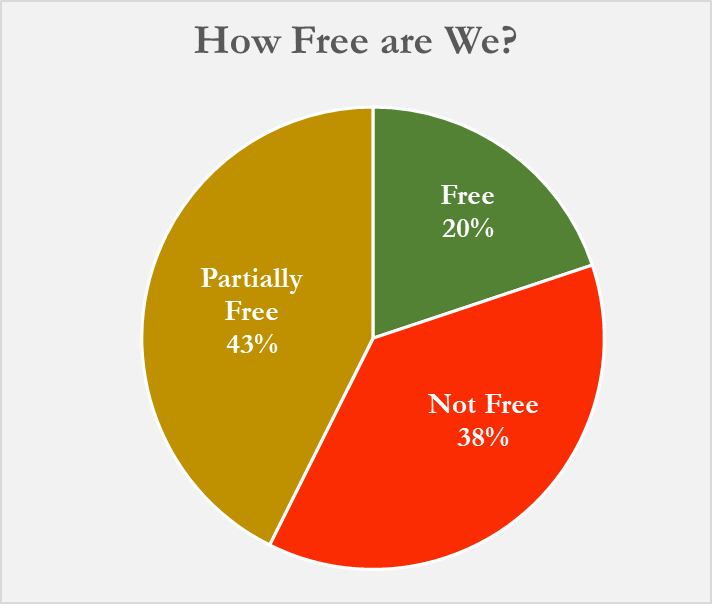
Despite colossal efforts, restrictions on religious freedom still impact large portions of the global population. Approximately 40% of the global population lives in a nation-state where individuals are not permitted to practice a religion of their choice. Acts of faith in these restrictive nation-states are met with harassment, imprisonment, beatings and death in some cases. 15% of the global population practices classic sharia law, which strictly prohibits any religion other than Islam. These restrictions violate critical human rights and should be retired from humanity.
Sources:
Freedom in the World | https://freedomhouse.org/report/freedom-world
Sharia Law Countries | https://worldpopulationreview.com/country-rankings/sharia-law-countries
Published : July 23, 2023
Restrictions on Voting
In some nation-states, voting is completely restricted and in others there are unnecessary barriers. Approximately a third of the global population has no influence on the head of state or legislature that administers their life. Members of a community who provide resources (tax) to the common good must be granted the ability to participate in how those resources are allocated. Anything less is a crime committed by government against the people. Let’s end taxation without representation.
Sources: Freedom in the World | https://freedomhouse.org/report/freedom-world
Public Monopolies
Published : June 24, 2023
Money
From the earliest human civilizations, various forms of money have been utilized. Good for good barter (e.g. a goat traded for a bushel of wheat) and the need for debt evolved into fiat currency (e.g. US Dollar, Chinese Yuan), which today is managed by nation-state governments. The administration of a monetary system requires managing the quantity (amount of money is in a system) and flow (ensuring money can be spent/received/saved) of money in a given monetary system. Historically, the management of money systems has been monopolized by nation-state governments for a variety of reasons, such as:
- The high cost of maintaining an infrastructure to create currency (e.g. printing bills and coins)
- The ability for governments to pay down debt via inflation (e.g. printing money to pay down debt)
- A government being a natural consensus mechanism (e.g. everyone believes in it)
- Historical precedent
Governments continuously mis-manage monetary systems. Here are two prime examples:

Sources:
Hyperinflation | https://www.econlib.org/library/Enc/Hyperinflation.html
Coin Market Cap | https://coinmarketcap.com/









https://www.economist.com/briefing/2023/08/31/how-cynical-leaders-are-whipping-up-nationalism-to-win-and-abuse-power